


Metamorphosis Pilot
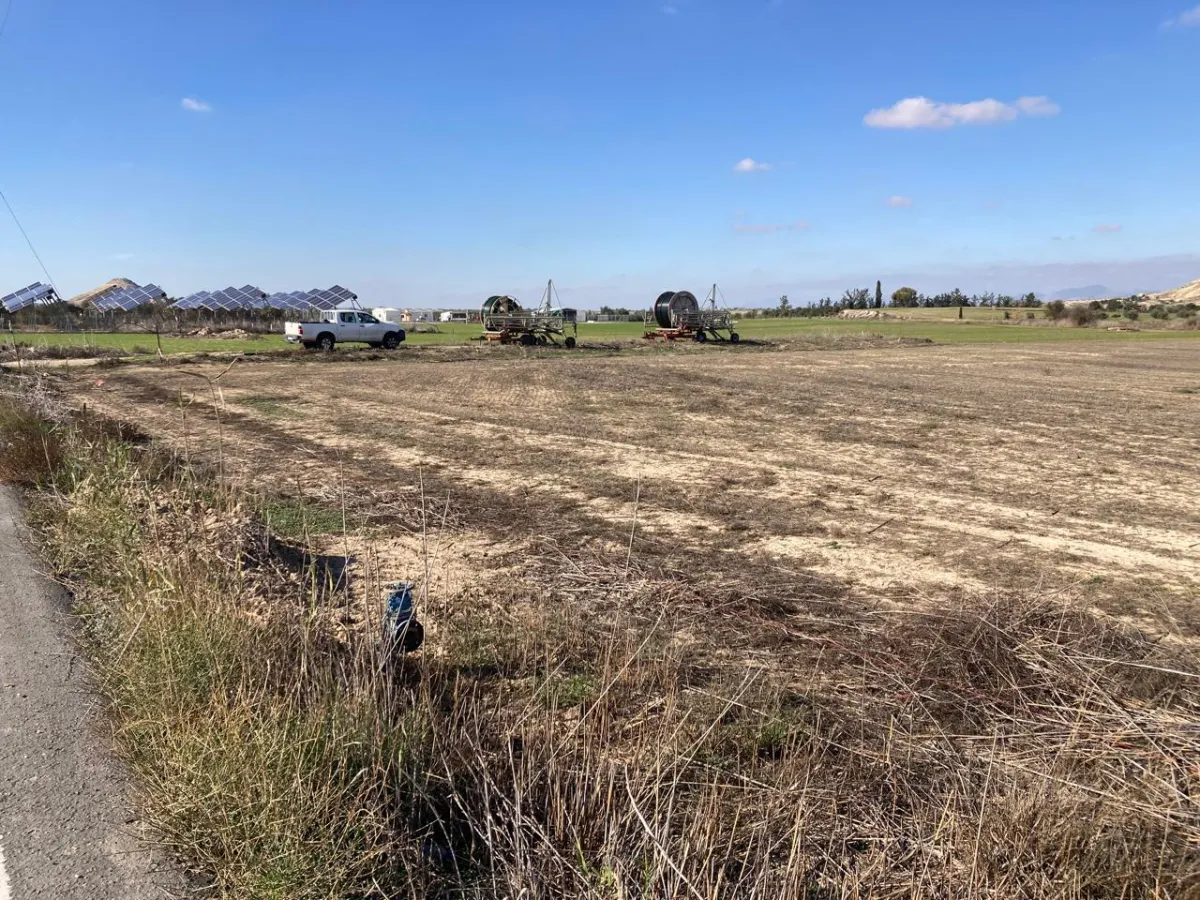
Athienou, Larnaca District, Cyprus
"Metamorphosis"... derived from the Ancient Greek word metamorphōsis, meaning transformation
Transforming Degraded Land into a Living Agroforestry System
Healthy soils create healthy ecosystems.
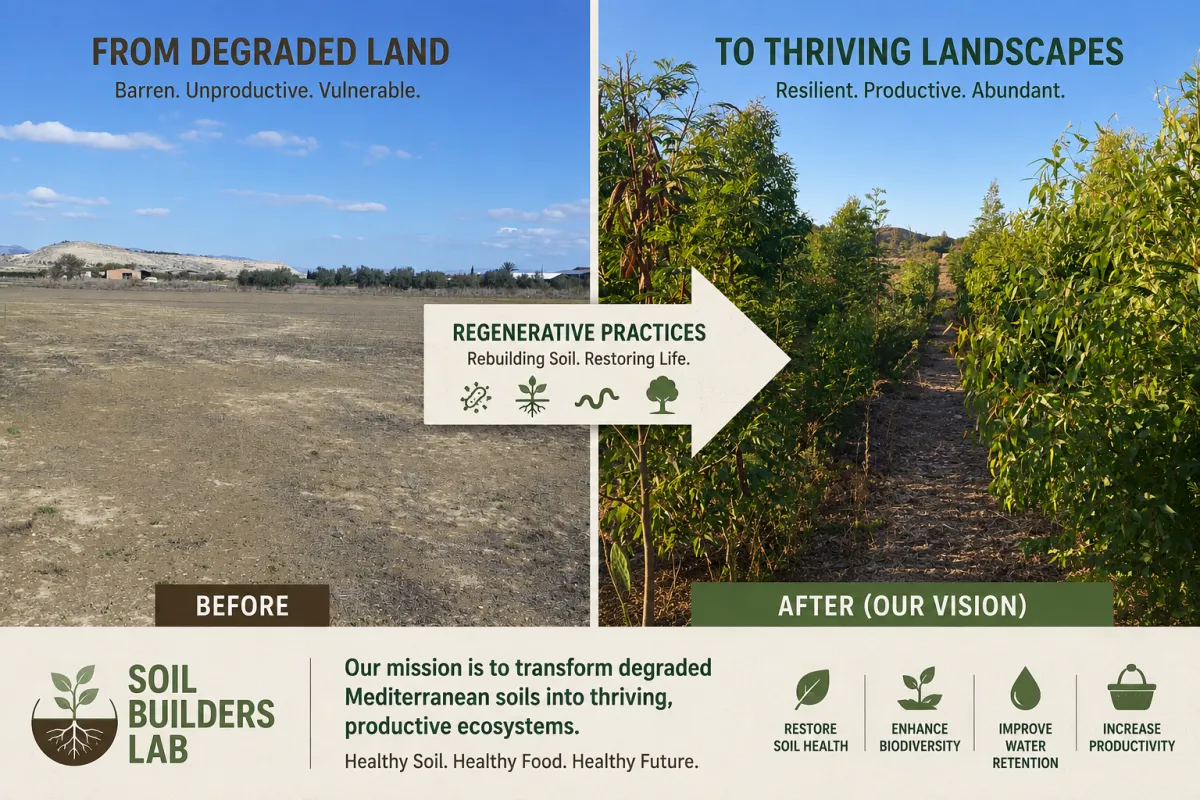
Our first pilot project "Metamorphosis" is a demonstration that degraded Mediterranean land
can be restored through biology rather than intensive chemical inputs.
It proposes an innovative approach as an alternative to conventional hay production-
the creation of rotational browsing agroforestry systems on degraded soils
in quite an arid location in Athienou, Cyprus.
By combining regenerative agriculture, agroforestry and soil microbiology, we aim to rebuild soil structure, increase biodiversity, improve water retention and create a resilient ecosystem,
capable of supporting productive agriculture under the challenging climatic conditions of Cyprus.
The experimental site aims to produce nutritious fodder for animals and healthy soils that support ecosystem services vital to humans through sustainable land management practices.
Experimental Design
To evaluate the long-term ecological and agronomic impact of regenerative agroforestry,
the site has been divided into two areas.
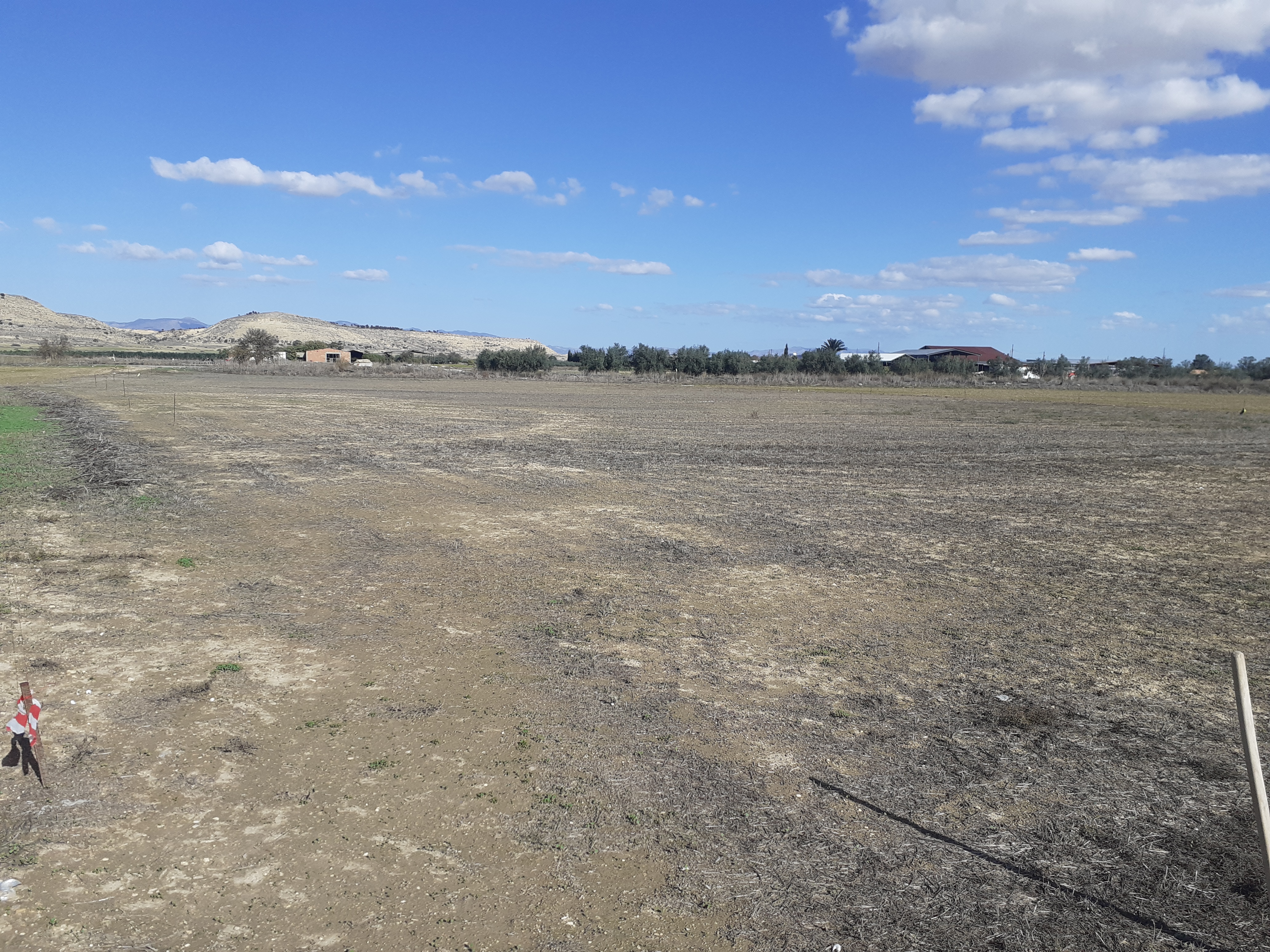
The Treatment Site
5,250 m2
A regenerative rotational browsing agroforestry system will be established
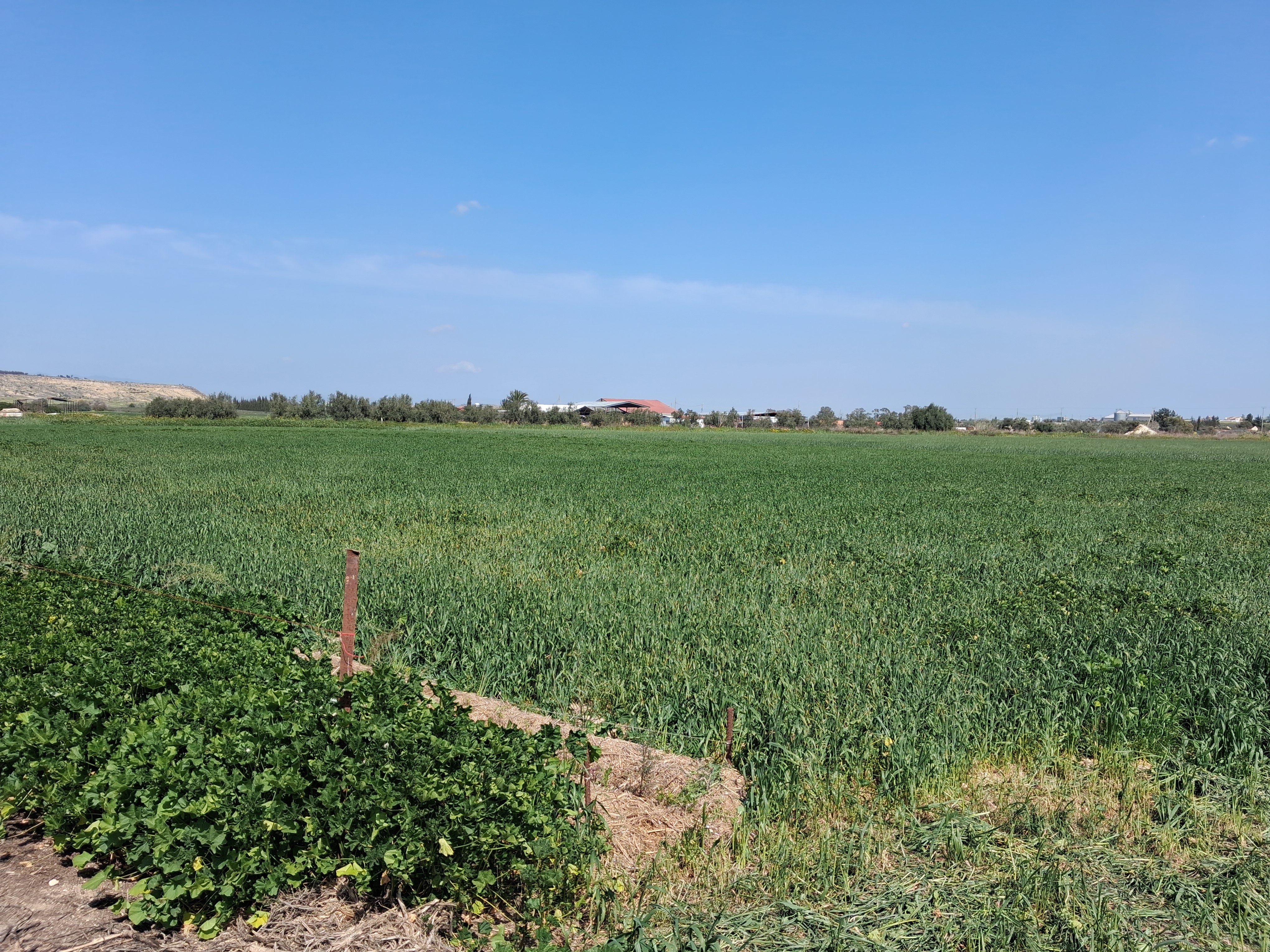
The Control SIte
6,536 m2
Conventional hay production will continue using existing management practices.
Restoration Strategy
Step 1.
Breaking Soil Compaction
Compacted soils prevent roots from accessing moisture and nutrients stored deeper in the soil profile.
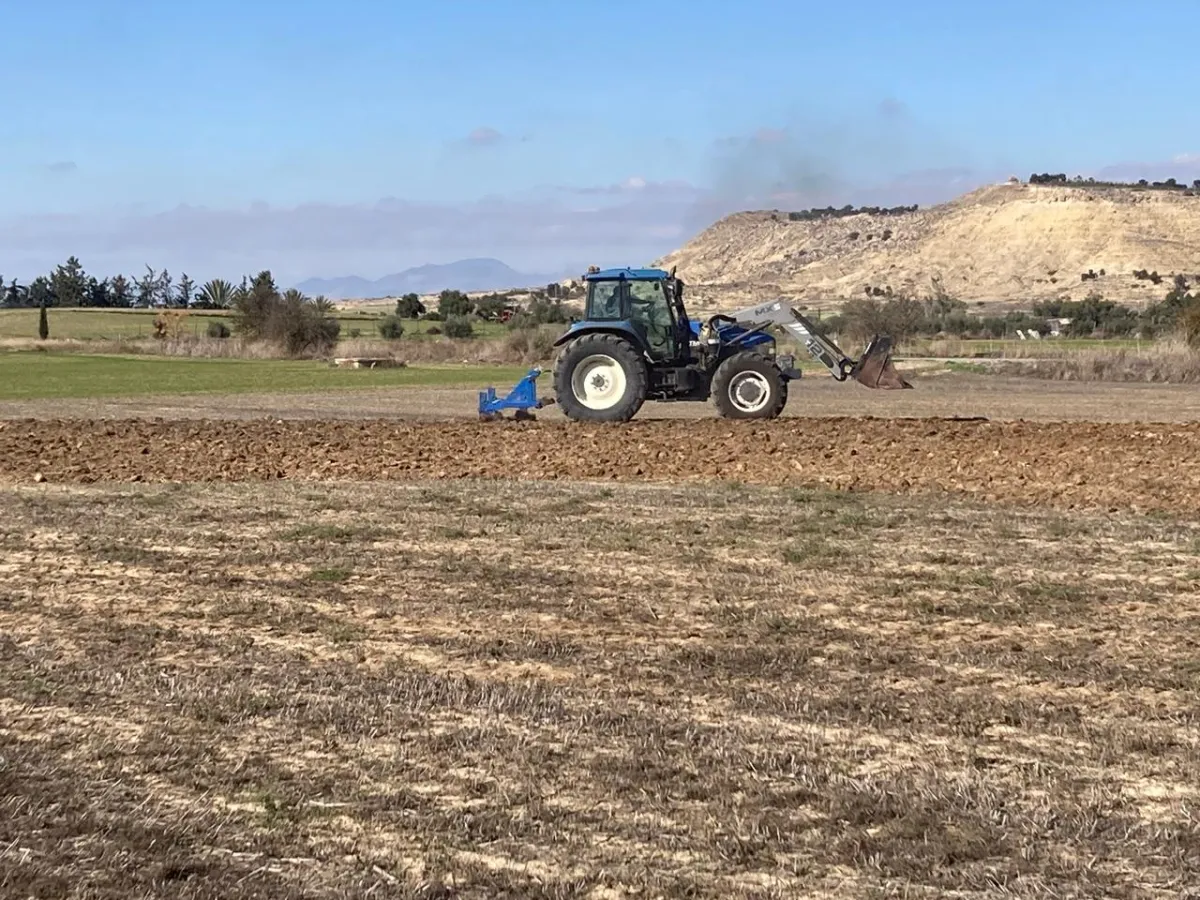
Before planting, the treatment area will be deep-ripped using a subsoiler
to improve root penetration, water infiltration and soil aeration.
Step 2.
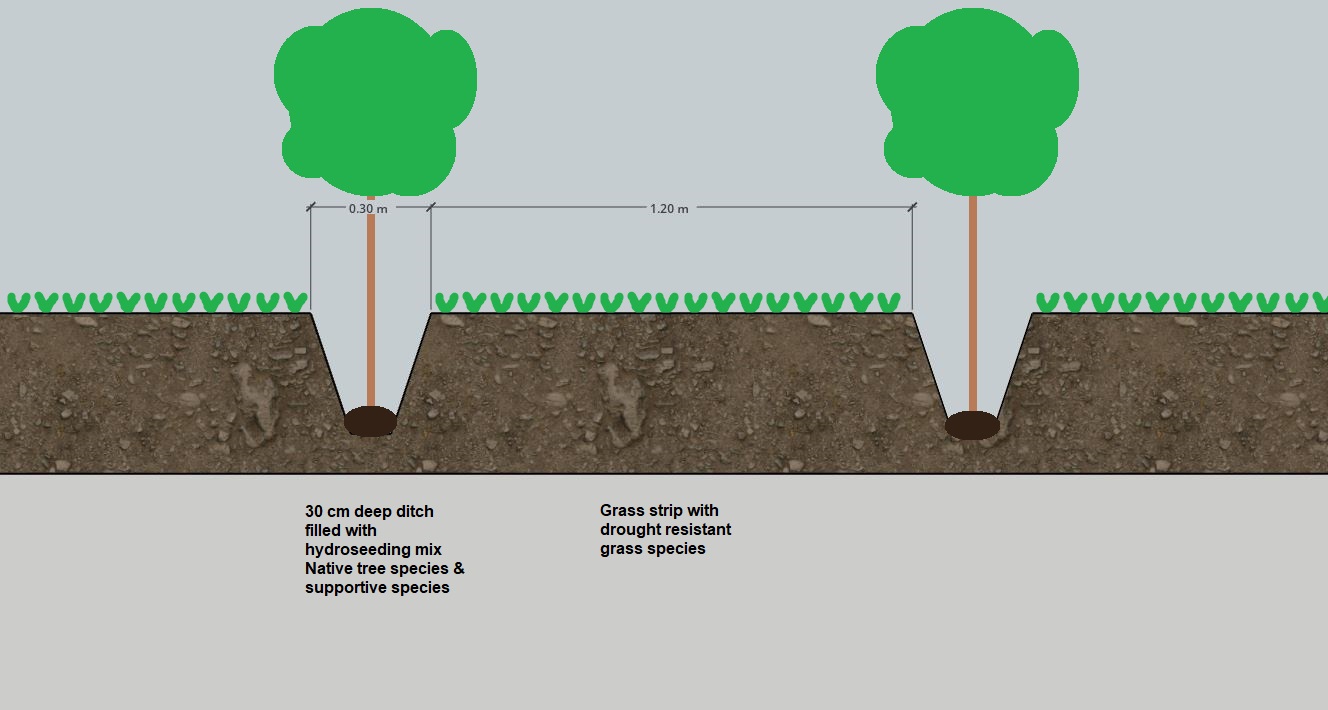
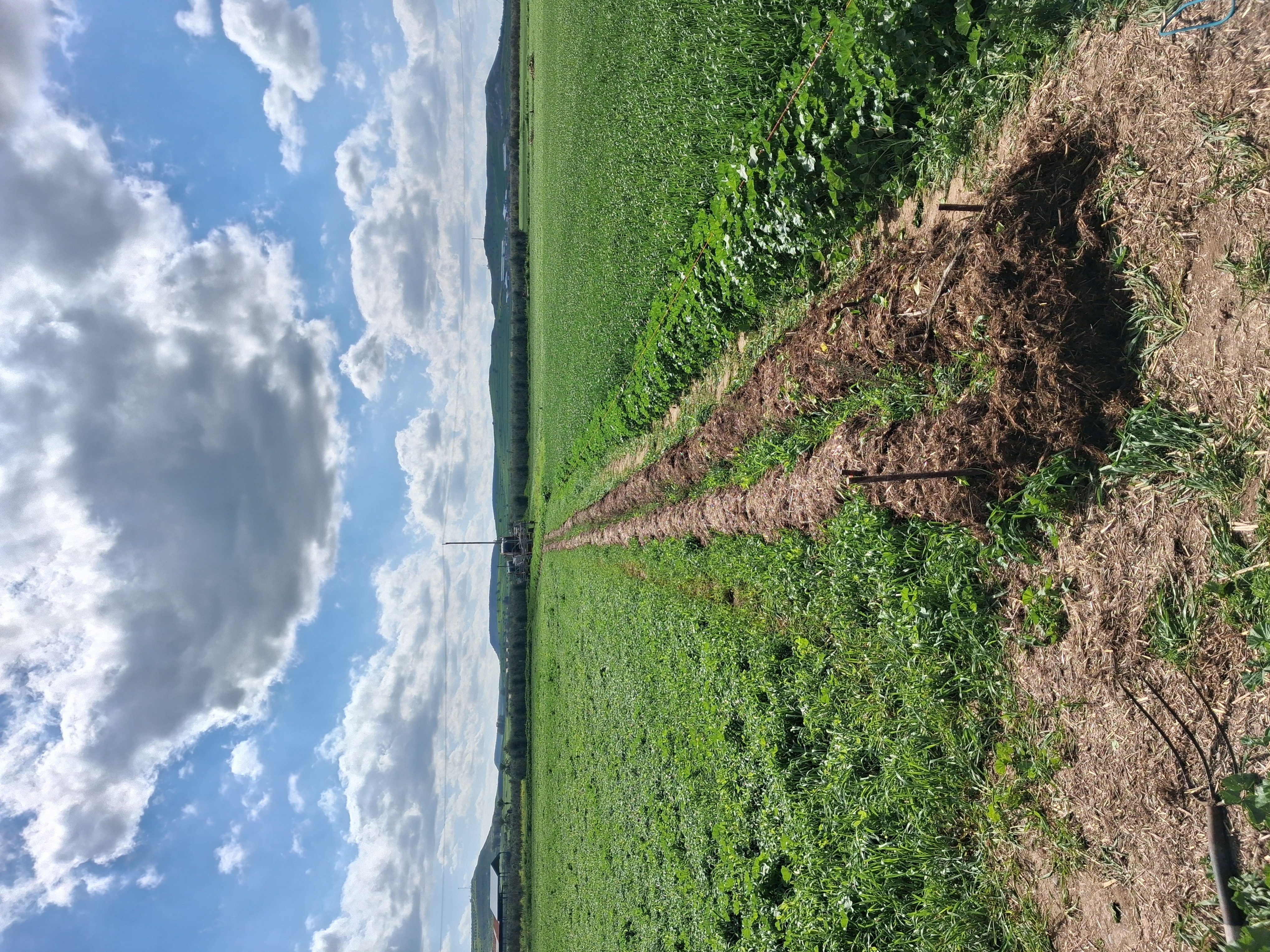
Creating Water-Harvesting Ditches
Planting ditches will be constructed along the landscape to capture rainfall, slow runoff and increase water infiltration. These ditches also create a more favourable microclimate for establishing young trees.
Step 3.
Rebuilding Soil Biology
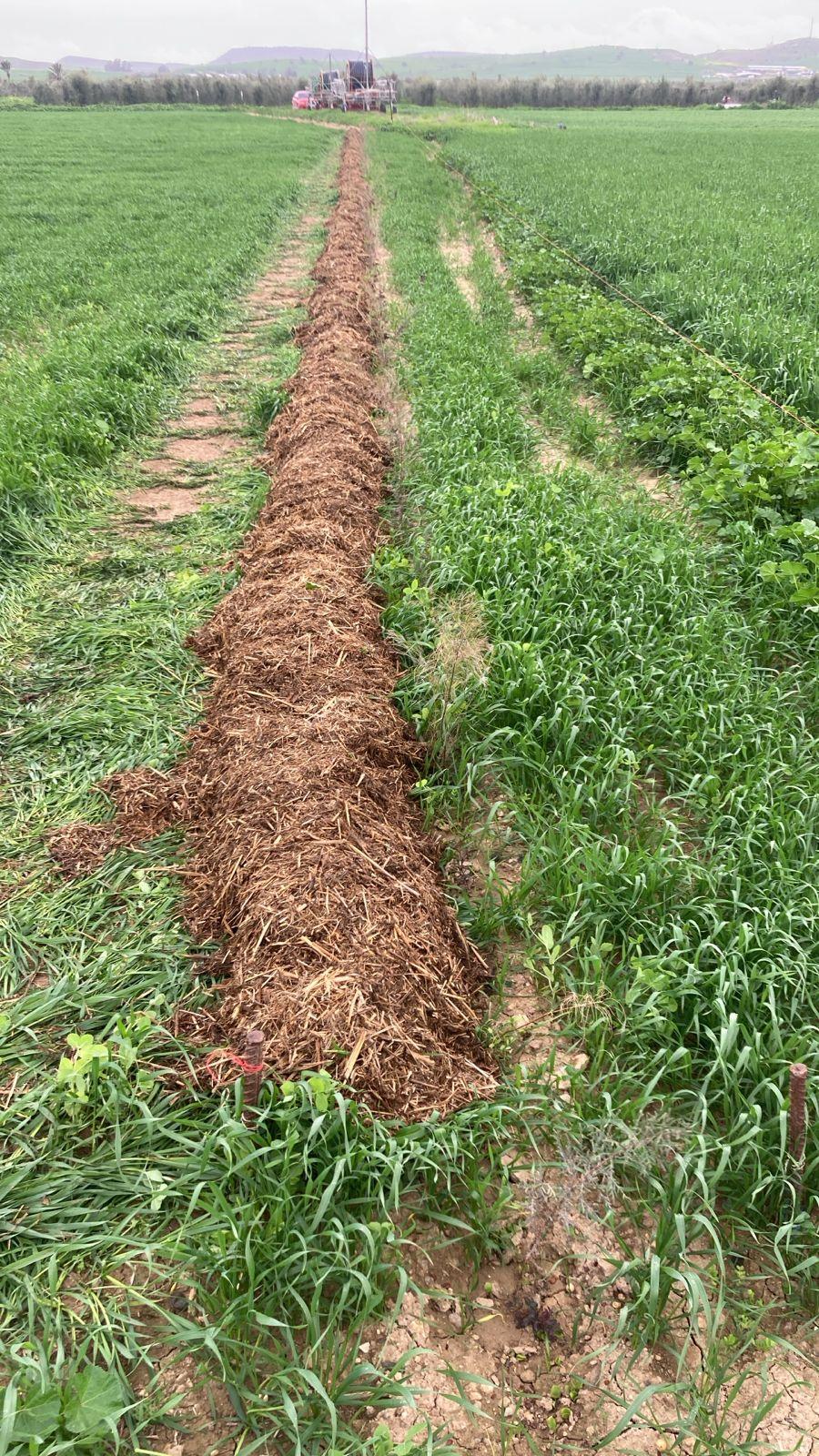
A compost slurry containing beneficial microorganisms and seeds of selected tree species will be
applied directly into the planting ditches using specialised pumping equipment.
This biological amendment introduces organic matter and diverse microbial communities
at the point of germination while helping reduce the effects of soil salinity.
Step 4.
Strategic Planting
Planting will take place in November to maximise natural winter rainfall
and improve seedling establishment before the dry Mediterranean summer.
Step 5.
Controlled Browsing
Rotational browsing, where animals feed by eating leaves, shoots, and fruit from high-growing, trees and shrubs,
is expected to begin two years after planting with a small herd of goats.
Browsing is expected to stimulate new plant growth and offer extra fertility to the ecosystem, closing the cycle.
Building a Resilient Agroforestry Ecosystem
Above Ground
A diverse mixture of fast-growing pioneer species and slower-growing
native trees will be planted at high densities.
The pioneer species will rapidly provide shade, reduce wind exposure and
improve growing conditions for slower-developing native species.
Together they will create a resilient, multi-layered ecosystem
capable of supporting rotational browsing while enhancing biodiversity and restoring ecological function.
Below Ground
Beneath the surface, an equally important transformation will be taking place.
Our objective is to rebuild a complete and functioning Soil Food Web
composed of bacteria, fungi, protozoa, nematodes and microarthropods.
As these organisms interact, they improve nutrient cycling, enhance soil aggregation,
increase water retention and help protect plants from pests and diseases.
Rather than feeding the plants directly, we are rebuilding the living soil ecosystem
that supports healthy plant growth naturally.
What We Will Monitor
Soil organic carbon and nitrogen
Microbial biomass and diversity
Microbial activity
Soil Food Web composition
Water infiltration
Soil salinity and pH
Tree survival and growth
Biodiversity
Forage production
Photo Gallery
Keep tabs on our progress!
© Copyright 2026. Soil Builders Lab. All rights reserved.
Soil Builders Lab is a brand operated by AA Betechnik Ltd